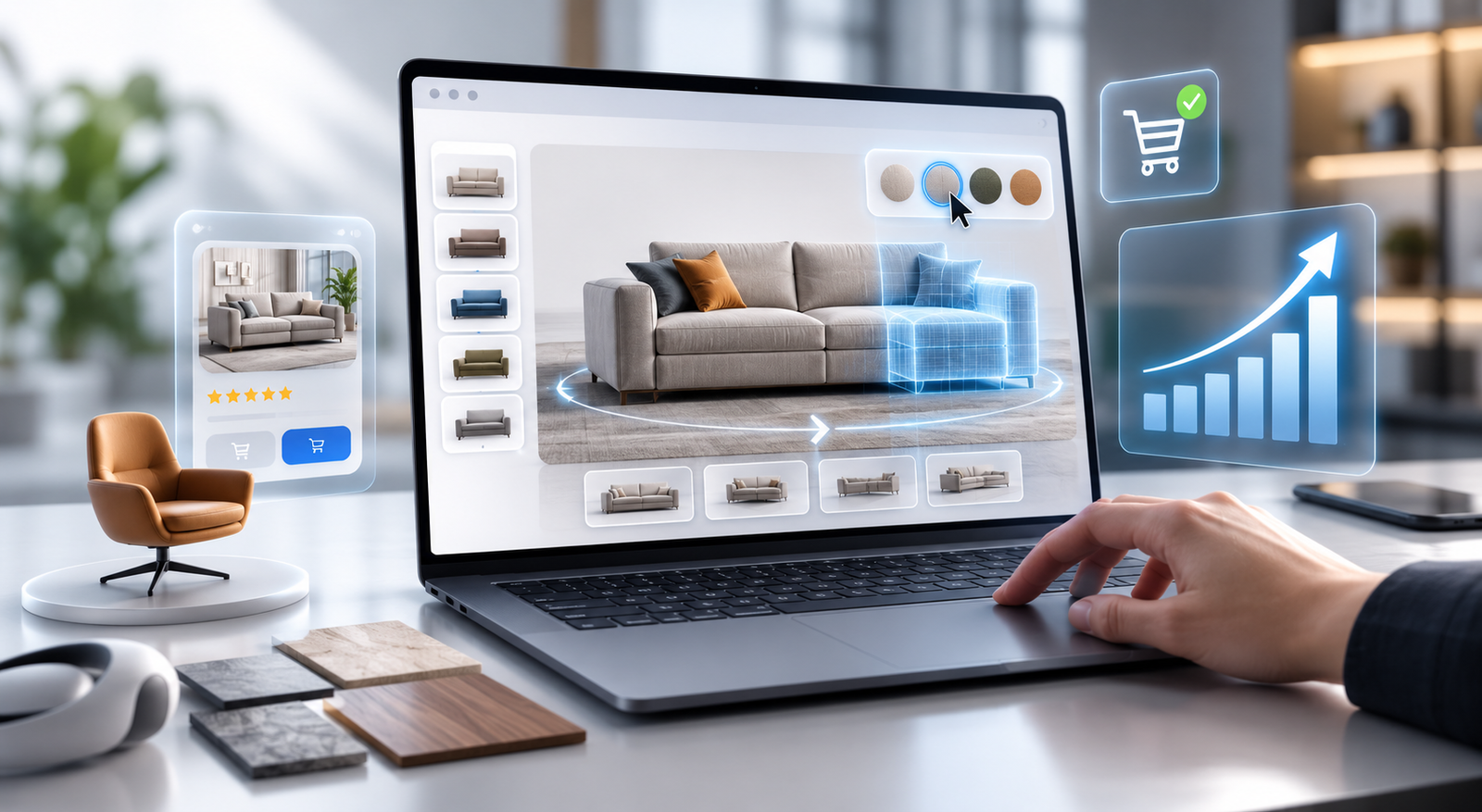
3D Product Visualization
3D product visualization helps ecommerce brands increase engagement, reduce returns, and improve buyer confidence by making products easier to understand before purchase.
Why 3D Product Visualization Matters
Ecommerce users cannot physically touch or inspect products before buying. That gap creates friction, hesitation, and uncertainty. 3D product visualization closes that gap by showing products in a more interactive and realistic way.
Instead of relying only on flat images, brands can present products from multiple angles, highlight materials, and demonstrate design details. This creates a stronger product experience and often leads to higher conversion rates.
How It Improves Conversions
3D visualization improves conversions by increasing time on page, improving product understanding, and creating more confidence at the point of purchase. When customers feel informed, they are more likely to complete the checkout process.
- Builds trust through realistic product presentation
- Reduces doubts about size, finish, and design
- Improves engagement with interactive viewing
- Supports premium brand positioning
Why It Can Reduce Returns
Many ecommerce returns happen because the product does not meet expectations. 3D visualization helps set those expectations more accurately before the purchase is made.
When customers can inspect a product from every angle, they are less likely to misunderstand what they are buying. That means fewer surprises and fewer avoidable returns.
Best Use Cases for 3D Product Visualization
3D product visualization works especially well for premium products, configurable items, furniture, technology products, and custom-designed goods.
- Furniture and home decor
- Electronics and gadgets
- Luxury and fashion products
- Industrial and technical equipment
- Custom configurators and branded products
Final Thoughts
If your ecommerce brand wants to sell more with less friction, 3D product visualization is one of the strongest visual tools available. It improves product clarity, strengthens trust, and supports better buying decisions.
For premium brands, this is not just a design upgrade. It is a conversion optimization strategy.